Zanetto Builders is a proud member of the Sustainable Builders Alliance. Here's what the SBA is, what its Roadmap to Net Zero Homes actually asks of a builder, and why we signed up.
Zanetto Builders is a proud member of the Sustainable Builders Alliance. It’s a national body pushing the Australian residential industry toward low-carbon, high-performance building — and it’s run by builders, which is the part that made us pay attention.
We didn’t join to collect another logo. We joined because the SBA is the first industry group we’ve come across that has written down, step by step, what a net zero home actually requires from the person holding the tools.
Zanetto Builders is a proud 2026 member of the Sustainable Builders Alliance.
What the Sustainable Builders Alliance is
The SBA grew out of Builders Declare, and its purpose is straightforward: get low-carbon, sustainable and genuinely high-performing construction into the mainstream, rather than leaving it to a handful of specialists.
Its members are builders, designers, energy assessors and tradespeople who have committed to that direction. You can see all of them in the Sustainable Building Directory — including our own listing, which sets out the certified Passive House work, the thirteen Certified Passive House Tradespersons and the Bluebush figures in full.
The Roadmap to Net Zero Homes
The centrepiece is the Roadmap to Net Zero Homes — a free, five-step guide describing what it takes to build a home that produces as much energy as it uses. The SBA calls it the zero carbon house equation, and it runs like this:
Good design — a home that needs very little energy to heat or cool in the first place.
Low-impact material specification — building with lower-carbon materials.
Performance construction — actually building it so it performs as designed, rather than as drawn.
Efficient appliance selection — heating, hot water, lighting, cooking and appliances that don’t undo the envelope.
Energy generation and offsetting — on-site generation to close the gap to net zero.
What’s useful about that sequence is the order. Steps one to three are the building. Steps four and five are the equipment bolted to it. Most conversations about sustainable housing start at step five — solar panels — and work backwards, which is exactly the wrong end. You cannot buy your way out of a leaky envelope with rooftop generation.
Step three is where most homes fall over
Point three — construct to perform as designed — is the one we’d underline.
A home can be designed beautifully, specified carefully, and still miss its targets by a wide margin because of how it was built. Insulation compressed into a corner. An airtight layer that was never a continuous layer. A thermal bridge nobody detailed out. None of that shows up on a plan, and none of it shows up in a brochure.
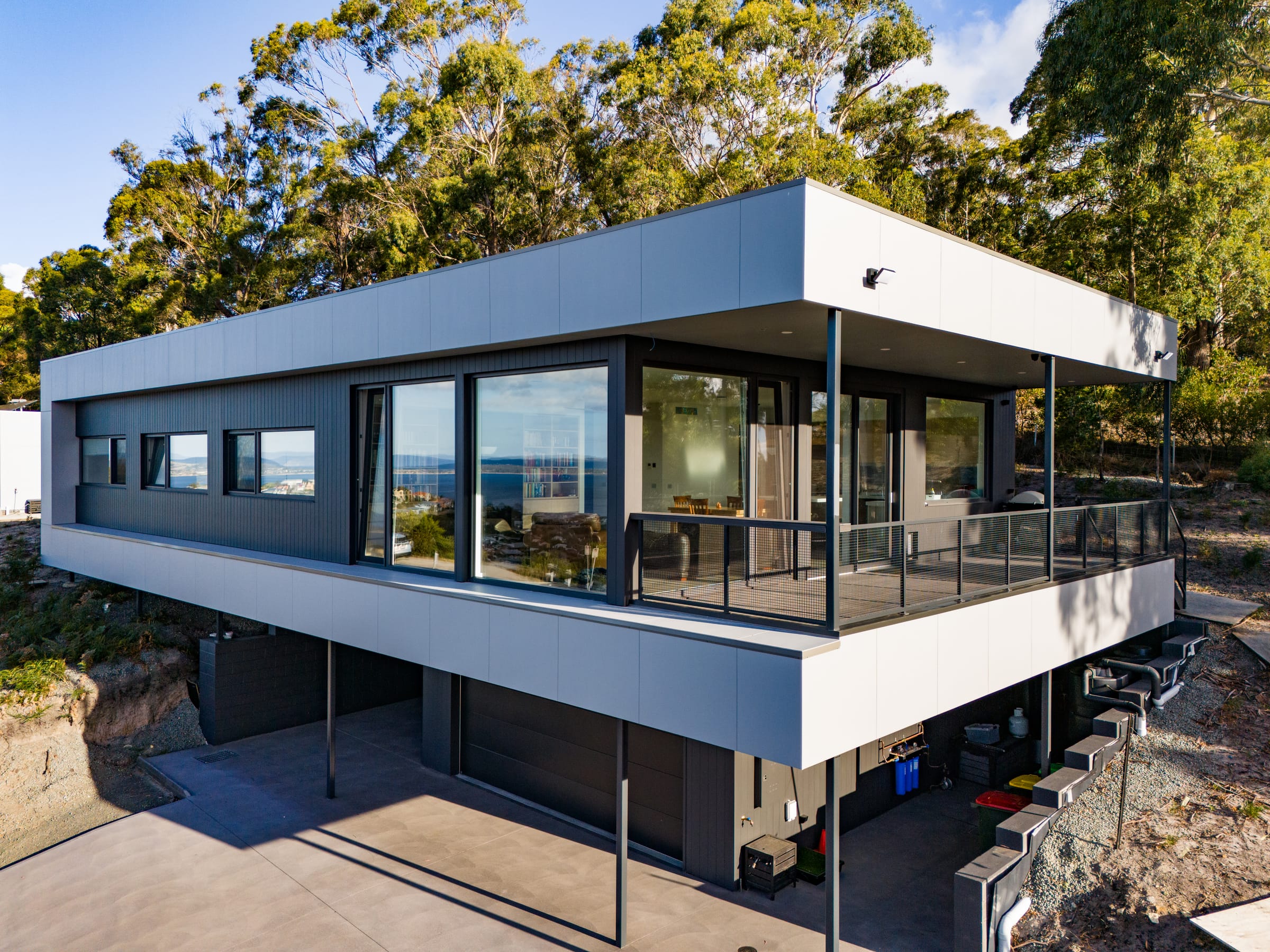
It shows up in a blower-door test. That’s why our position on this hasn’t changed: certified, not claimed. Our certified Passive House at Blackmans Bay was independently tested at 0.5 air changes per hour against a limit of 0.6, and a heating demand of 10 kWh/m² a year against a limit of 15. Those are audited numbers, not aspirations — and in 2026 that home was named HIA Australian GreenSmart Home of the Year.
The Roadmap’s step three and the Passive House standard are asking the same question in different words: did the building you handed over behave like the building you promised?
Why an alliance is worth belonging to
There’s a version of sustainability marketing that costs a builder nothing — a page on a website, a few words in a proposal, a solar array at the end. The industry has plenty of it.
The alternative is slower and more expensive. It means 13 of our team holding Certified Passive House Tradesperson qualifications, testing what we build, and publishing the results whether or not they flatter us. Belonging to a group of builders doing the same thing is worth something — partly for what you learn, and partly because a standard held in common is harder to quietly drop than one you set yourself.
If you’re a homeowner trying to work out whether a builder’s sustainability claims are real, the Roadmap is a good place to start. It will tell you what questions to ask, and it’s free.