It’s one of the most common problems in existing homes, and it usually has very little to do with the heater itself.
Uneven temperature in a house is almost always a building performance issue.
Here’s what’s actually causing it and what can be done about it.
Why Homes Develop Uneven Temperatures
When a home struggles to hold a consistent temperature, heat is usually escaping or entering the building unevenly.
The most common causes are:
Insulation gaps
Thermal bridging
Air leakage
Poor glazing
Weak ventilation strategy
Usually it’s several of these working together.
That’s why simply upgrading the heating system rarely fixes the issue long-term. If the building envelope is underperforming, the system just works harder trying to compensate.
The result is higher energy use and a home that still feels uncomfortable.
Insulation Gaps and Performance Weak Points
Insulation only works properly when it’s continuous.
Even small gaps can create noticeable cold spots because heat escapes through the weakest point first.
A compressed batt behind a pipe or missing insulation above a bulkhead might seem minor during construction, but those small weak points can affect comfort for the life of the home.
Common Weak Points
Around downlights
Ceiling penetrations
Windows and doors
Roof junctions
Behind cabinetry
Skillion roofs
This is why some homes still feel cold despite technically being insulated.
The insulation might exist, but it isn’t performing consistently.
The Role of Thermal Bridging
Thermal bridging is another major cause of uneven temperatures.
A thermal bridge is simply a path that allows heat to bypass insulation.
Materials like steel, concrete, and timber framing can transfer heat far more easily than insulated sections around them.
That’s why certain parts of a wall or ceiling feel colder than others.
Common Thermal Bridge Areas
slab edges
steel beams
balconies
window frames
wall junctions
In high-performance homes, these areas are carefully detailed to reduce heat transfer and maintain more stable internal temperatures.
We’ve written more about[ thermal bridging in construction](/post/fix-thermal-bridging-problems-passive house-construction) and how it affects comfort long-term.
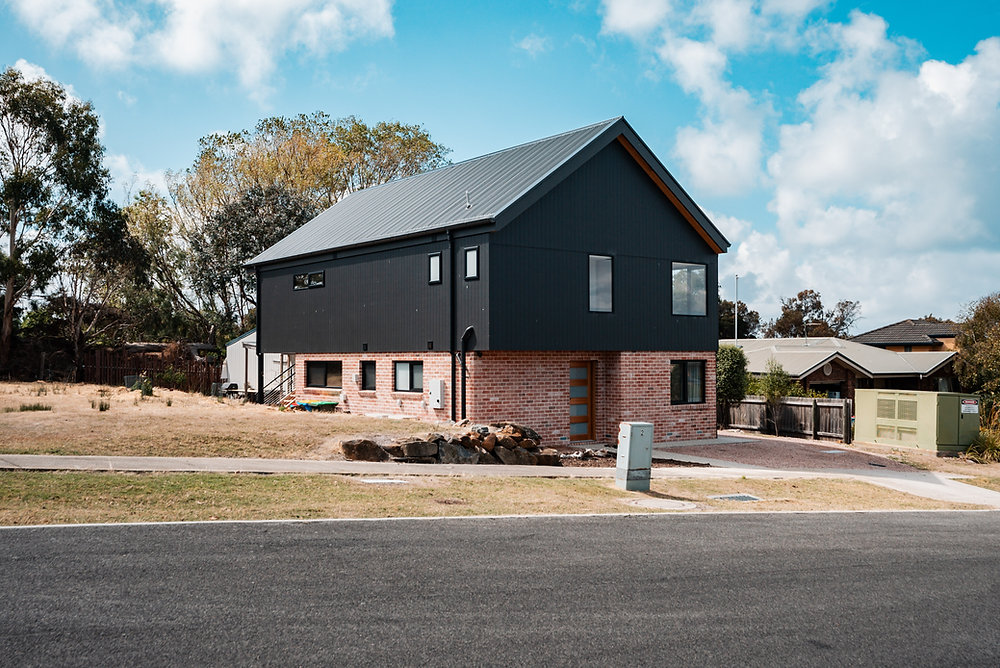
Bluebush, Blackmans Bay — tested at 0.5 air changes per hour against a limit of 0.6.
Airtightness and Air Leakage
Air leakage is one of the biggest causes of temperature imbalance in a home.
Small gaps throughout the building allow conditioned air to escape while outside air leaks in.
You usually notice it as:
Drafts
Cold corners
Rooms that never warm up properly
Heating systems constantly running
A leaky home struggles to maintain stable temperatures because the internal environment is constantly changing.
This is why airtightness matters so much in high-performance construction.
Once uncontrolled air movement is reduced, temperatures become more stable and the home feels significantly more comfortable.
Why Passive House Homes Feel More Consistent
Everything that causes uneven temperature in a house is exactly what Passive House construction is designed to eliminate.
The weak points simply aren’t there. That’s why these homes feel noticeably calmer and more consistent to live in. No cold corners. No major temperature swings. No room that always feels wrong.
The building envelope does the work instead of relying on mechanical systems to constantly correct problems.
Bluebush, Blackmans Bay — the insulation line and the airtight layer are decided long before either is visible.
FAQs
Why is my house unevenly heated?
Usually because heat is escaping unevenly through the building envelope due to insulation gaps, air leakage, glazing issues, or thermal bridging.
What causes uneven temperatures in a house?
The most common causes are insulation gaps, air leakage, thermal bridging, poor glazing, and ventilation issues.
Why is one room always cold?
That room is usually losing heat faster than the rest of the home through weak insulation, glazing, drafts, or exposed surfaces.
Can insulation cause uneven temperatures?
Yes. Missing, compressed, or poorly installed insulation commonly creates cold spots and temperature imbalance.
Does thermal bridging affect comfort?
Significantly. Thermal bridges create colder surfaces and allow heat to escape much faster than surrounding insulated areas.
Why does my upstairs get hotter?
Heat naturally rises, but poor roof insulation, glazing, ventilation, and air leakage usually make the problem worse.
Can airtightness improve comfort?
Absolutely. Airtightness helps stabilise internal temperatures and removes uncontrolled drafts throughout the home.
Why do Passive House homes feel more consistent?
Because they’re designed to eliminate the exact building issues that create uneven temperatures in the first place.
A Comfortable Home Starts With the Design
A home with uneven temperatures is usually telling you something important about how it’s performing. The solution isn’t normally a bigger heater.
It’s improving the building itself.
If you’re building new or trying to improve an existing home, understanding how the building envelope performs makes a huge difference to long-term comfort. It’s also worth reading how[ Passive House homes in Tasmania perform](/post/do-passive house-homes-work-well-in-tasmania-climate) year-round.